













Friday Roll Login On Mobile In Italy

In 2026 Friday Roll Casino is available in Italy and from smartphone offers quick access, tidy account and responsible gaming.

Fortune Gems 2 Slot

Table of Contents

  • The Dog House Megaways Slot
  • Lucky Joker 10 Extra Gifts Slot
  • Sword of Ares Slot
  • Floating Dragon Hold & Spin Slot
  • Leprechaun Riches Slot
  • Fruit Cocktail Slot
  • The Dog House Megaways Slot
  • Sword of Ares Slot
  • Fruit Million Slot
  • The Dog House Megaways Slot
  • Big Fisherman Slot
  • Big Fisherman Slot
  • Seven Books Unlimited Slot
  • Friday Roll Casino Fortune Slot
  • Sword of Ares Slot
  • Floating Dragon Hold & Spin Slot
  • 9 Mad Hats Slot
  • Floating Dragon Hold & Spin Slot
  • Big Bass Splash Slot

How to Use Friday Roll Login Without Errors

The first impression on a mobile platform always comes from a very simple action: opening, entering data, and immediately understanding if the path is linear. No special effects are needed. You need to see the fields clearly, understand where you are entering, where you are recovering access, and where you are checking the latest operations. In Italy, many users use their phone as their primary screen, so a clean entry is not a technical detail: it's the point on which everything else depends.
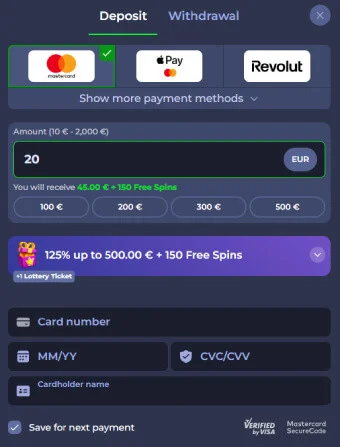
Login 1

Imagine a common situation. You're on a break, you have a few minutes, you open your profile and want to log in without making password mistakes or confusing account sections. Usually, the most practical players do this: they calmly read the first screen, check if the browser has saved old data, and only then confirm. This small order avoids trivial errors that, on mobile, become more annoying than on a computer.

Another useful aspect concerns continuity. If you have used your profile before, it is important to find clear menus, readable buttons, and a clear separation between the personal area, payments, games, and support. When this structure works, time is spent deciding what to do. When it doesn't work, time is wasted searching for where to do it.

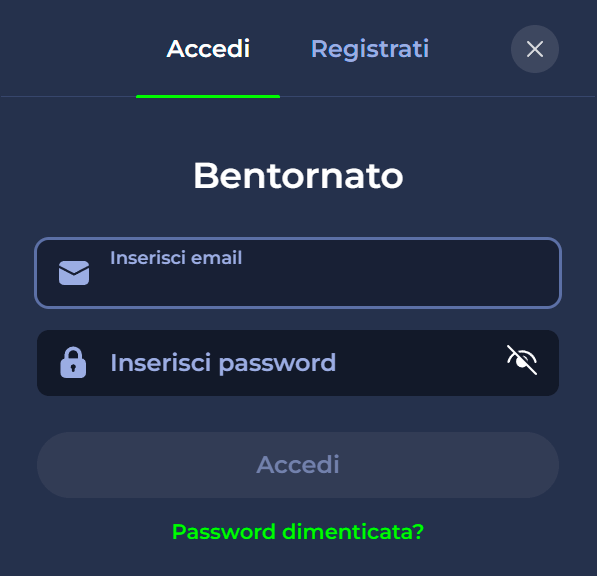
Login 2

Prepare The Account Before The First Login

Many think the most important part begins after logging in, when they choose a game or check their balance. In reality, the useful work comes before. A tidy account, with consistent data and already reviewed settings, reduces many subsequent problems. Friday Roll Casino, if used from a smartphone, requires the same approach you would use for a banking app: a few steps, but done well.

If you are creating or organizing your profile while away from home, it's advisable to slow down a bit. Enter the data, reread it, check the phone number, observe if the address is written consistently with the documents you might need later. Usually, less patient users skip this check and only notice it at the least convenient moment, for example, when they want to manage their account or verify their identity.

The platform is available in Italy for adult users and should be considered a space to be used within clear personal limits. This applies from the initial phase. If you set a strong password, correct contact method, and prudent habits from the start, the rest of the journey becomes simpler.

What to Check in Personal Data

Before logging in regularly, check the items that often cause friction: name, surname, date of birth, contact details, profile preferences, and recent history. On a phone, even one wrong character can create doubts in a later step. Imagine wanting to fix everything on the bus, with notifications arriving and a less-than-perfect network. In that case, the best way is to do fewer things, but do them carefully: one extra check now is worth much more than a quick correction made later.

Access From Phone And Session Rhythm

Playing on mobile doesn't just mean reducing everything to a smaller screen. The rhythm changes. Every action is faster, every distraction enters more easily, every choice seems lighter than it really is. That's why smartphone access works well when treated as a short, orderly path, not as an always-open door without rules.

Login 3

If you open your profile in a quiet moment, you immediately notice the difference. You see the balance better, check the history, enter a specific section, and don't wander aimlessly. If, on the other hand, you log in while doing something else, the risk is to lose focus: you touch a menu, go back, change section, reopen the account, then forget what you wanted to do. It's not a rare problem, quite the opposite. It happens often on phones.

This is why many experienced users build a small personal routine. They open the account, check the available amount, choose the type of session, and define beforehand when to exit. It's a simple sequence, but it helps a lot. Also, because in 2026 mobile convenience is an advantage only if it remains under control.

When It's Convenient to Save the Device

Saving the device can be convenient, but not in every context. If you only use your phone, with an active screen lock and protected access, the feature can reduce times and make login more linear. If, however, you share the device, often change networks, or leave your phone in uncontrolled environments, it's better to be more cautious.

Think of a very concrete scenario. You're at home, you always use the same phone, you've set a secure code, and you don't leave sessions open. In that case, saving might make sense. But if you're traveling, lending your phone, or using unstable networks, it's better to avoid shortcuts. Quick login is not worth more than account protection.

Difference Between Logging In Quickly And Logging In Well

Logging in quickly always seems like a good idea, especially when you have little time. However, there's a clear difference between speed and precision. A well-done login checks at least three things: correct data, session objective, and real account status. Without these three points, speed risks becoming mere haste.

Usually, the most disciplined players behave like this. First, they log in, then they look at the balance and history, and finally, they decide whether to stay or leave. Imagine opening your profile after a long day, perhaps tired. At that moment, the phone invites you to do everything with a touch, but precisely then you need to stop for half a minute and choose lucidly. It's a micro-gesture, but it changes a lot.

Verification, Withdrawals and Transaction History

The financial part is the one that requires more order. On mobile, every detail seems small, but has big consequences. If the profile data is consistent and the documents are ready, the account is managed better. If this step is missing, even a simple request can turn into a sequence of checks, corrections, and waits.

Imagine you have finished a session and want to settle the account immediately. You open the payments section, look at the history, check if everything is clearly recorded, and only then decide on the next step. It's the most effective way. Many do the opposite: they act first, then verify. On a smartphone, this inversion costs time because correcting afterwards is more inconvenient.

Before any important operation, it is advisable to re-read the profile information, check if the chosen method is consistent with the account settings, and verify if an additional confirmation step is needed. This is not unnecessary bureaucracy. It's the practical way to avoid avoidable blocks.

Aspetto pratico

Cosa guardare da mobile

Why it helps

Stato del profilo

Dati anagrafici, recapiti, preferenze

Riduce errori nei passaggi successivi

Operazioni sul conto

Storico recente e conferme visibili

Helps to immediately understand what was successful

Documents

Foto leggibili e informazioni complete

Evita caricamenti ripetuti

Chosen method

Coerenza con le impostazioni del conto

Limita correzioni dell’ultimo minuto

Security

Password, dispositivo, sessioni aperte

Protegge l’accesso nel tempo

Catalogo, Filtri E Scelte Da Mobile

Once the account is settled, the next step is to understand how to navigate the catalog without losing focus. On a phone, a simple logic works best: you enter, choose a category, use essential filters, and evaluate a few options at a time. It's not useful to scroll through everything. It's more useful to know what you're looking for.

Imagine you want to have a short session in the evening. If you open ten different sections, time passes before you even start. Usually, more organized users make a quick selection, observe if the title is suitable for the available time, and decide immediately whether to continue. This reduces the feeling of chaos that sometimes accompanies navigation on a smartphone.

Here too, the quality of the interface matters. Readable buttons, understandable search, quick return to home, and easy-to-find favorites help much more than an endless list. In 2026, the real mobile advantage is not having 'more choice', but reaching the right choice faster for that moment.

How to Find a Title Without Wasting Time

The most practical way is to start with the context. Do you have ten minutes or an hour? Do you want a linear session or something that requires more attention? If you answer these questions first, the filters become truly useful. If, on the other hand, you open the catalog without an idea, you risk changing sections continuously and consuming time just in searching.

It's usually best to observe a few elements: the title's rhythm, the clarity of the commands, readability on a small screen, and the ease with which you can interrupt. Think about someone playing during a short break. A choice suitable for that context is better than a choice made just because it appears first. The difference is immediately noticeable.

Budget, Timeout and Scheduled Break

Budget management on a phone requires concrete discipline. It's not enough to tell yourself 'I'll be careful'. You need to decide beforehand how much to use, when to stop, and what to do if the session takes a different turn than expected. Many problems arise precisely from the absence of this initial decision.

Imagine a common scenario. You open the profile for a few minutes, then stay longer than expected because you keep postponing leaving. This is where timeouts, breaks, and personal limits come into play. Used well, they don't block the fun. They make it sustainable. Often, simple, pre-set boundaries are enough to avoid that feeling of dragging on without a clear choice.

Assistance, Common Problems and Good Habits

Assistance is truly useful when it comes after a minimal check on your part. If a page doesn't load, if the account doesn't show what you expect, or if a step gets stuck, it's advisable to first observe the problem precisely. Where does it appear? Always in the same place? Only on a certain network? Only on mobile? These questions greatly shorten the path to the solution.

Usually, the least effective requests are the vague ones. 'It doesn't work' says little. It's much better to explain what you were doing, what device you were using, what network you had, and what attempts you've already made. Imagine wanting to solve everything in ten minutes. An organized description is worth more than three hastily written messages.

Then there's a good habit that many ignore: closing the session consciously. After finishing, check your account, truly log out of your profile, and leave the phone in a clean state. It's a small gesture, but it protects both mental order and practical security. Friday Roll Casino, like any gaming environment used on a smartphone, works best when treated methodically and not automatically.

FAQ

The most useful way is to immediately fix the basics: consistent personal data, correct contact details, a strong password, and checking account settings. Many users underestimate this moment because they want to get in right away, but the initial part is precisely for making everything that comes after easier. If you do this work calmly, while stationary and without haste, you reduce errors that otherwise re-emerge when you want to manage your balance, verify your profile, or close a session in an orderly manner.

It depends on the type of operation and how precisely you want to see everything. For logging in, checking your account, and having a short session, the phone is often sufficient. For adjusting delicate profile details or re-reading certain information very carefully, many people still prefer a larger screen. The best choice, in practice, is to use the device that allows you to read well and make fewer mistakes, not the one that just makes you go faster.

First, the profile status, then the recent history, and finally the method you intend to use. This simple sequence avoids many repeated steps. If you already know that the data is consistent and that the account clearly shows the latest operations, every subsequent decision becomes easier. Conversely, if you act immediately without checking anything, you risk having to go back when you are already in the middle of the process.

It makes sense before you really need it. This is the part that is often understood too late. A scheduled break is useful when you notice that sessions are lengthening without reason, that you open your profile out of habit rather than choice, or that your phone leads you to log in automatically. At that moment, stopping is not a sign of difficulty, but a practical measure. It's better to use simple and clear tools at the beginning than to wait for a more tense situation.

Usually the signs are concrete: you change sections continuously, you no longer remember why you logged in, you check your balance too many times, you extend the previously decided time and always postpone leaving. On smartphones, this happens easily because switching from one screen to another is very fast. When you notice these signs, the best choice is to close, take a short break, and log back in only if you still have a clear objective.

The most useful message contains a few well-chosen elements: what you were doing, at what point the problem appeared, which device you were using, and what you have already tried to do. This way, support understands the context immediately and can respond more concretely. A generic text prolongs the process because it forces them to reconstruct everything from scratch. If you describe the situation well, you have already done half the work.

Because closing a session properly means leaving the account in order, protecting access, and breaking the rhythm in the right way. Many people only think about logging in quickly, but the final part is just as important: checking what you have done, verifying that no actions are pending, and performing a true logout from your profile. This simple step improves both security and the quality of your routine in the long run.